Why You May Have to Visit a Family Dentist More Than Twice a Year

Most people grow up hearing that dental care means one checkup with a family dentist every six months. While that schedule works well for many patients, it is not the right fit for every smile. Some people benefit from more frequent visits because their oral health needs, habits, or medical history place them at a higher risk for dental problems.
The twice-a-year schedule is a guideline, not a rule
Going to the dentist once every six months is a familiar standard because it helps the average patient stay on track with preventive care. At each checkup, the family dentist will clean the smile and look for any signs of oral health problems. This biannual schedule is a strong fit for patients in good oral health and with a low risk of gum disease, tooth decay, and oral cancer. It provides regular support without requiring more appointments than necessary.
However, patients with significant dental history may need more frequent checkups — about every four months. Examples include those with active gum disease or plenty of dental restorations in the mouth. Those with a high risk of developing gum disease, tooth decay, and oral cancer (such as patients who smoke or experience dry mouth from medication) also benefit from extra attention.
What happens during a dental checkup?
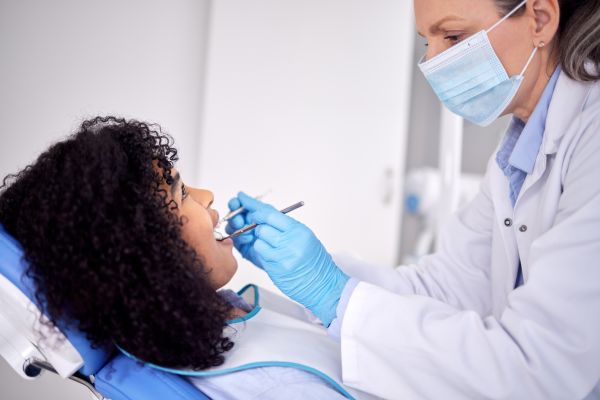
The average dental checkup includes a professional cleaning and examination of the mouth. During the cleaning, a dental hygienist scales buildup off the teeth and polishes them. This makes the smile brighter and acts as a deterrent to future bacterial buildup. They will also floss the teeth.
Next, the family dentist examines the mouth for signs of gum disease, tooth decay, and, sometimes, oral cancer. If any issues are found, they will recommend treatments, such as deeper cleanings for gum disease, to address the issue in its earliest stages. They close out the appointment with oral hygiene advice or add-on services, like fluoride treatments for sensitive teeth.
What to expect from more frequent dental visits
Patients can expect dental visits to follow the same strategic format, regardless of how often they are scheduled. The only difference is the frequency: The family dentist and hygienist can perform these steps at shorter intervals to keep oral health problems at bay.
For example, active gum disease requires more frequent professional cleanings to keep the bacterial load in the mouth low. This frequency helps limit future damage to the smile. It can even reverse early-stage gum disease (gingivitis) by helping the gums reattach to clean tooth surfaces.
For those with dry mouth or recurrent tooth decay, more frequent visits can help detect weak spots before they develop into larger cavities. Because saliva helps wash away bacteria and acids, dry mouth can leave teeth more vulnerable between appointments. Seeing a dentist more often allows them to monitor changes in the enamel, as well as recommend products or habits that better protect the teeth.
Book a visit with a family dentist
A family dentist makes recommendations based on what helps the patient the most, not on what sounds most familiar. That personalized approach is one of the biggest strengths of ongoing dental care. After all, when the appointment schedule matches the patient, care can be more effective. Contact us today for dental care tailored to your smile.
Request an appointment here: https://familydentistprescott.com or call Joseph A. Savoini D.M.D., P.C. at (928) 297-3040 for an appointment in our Prescott office.
Check out what others are saying about our dental services on Yelp: Family Dentist in Prescott, AZ.
Recent Posts
Family dentists are general dentistry professionals who have undergone training to learn how to treat patients of different ages, ranging from school-aged children to the elderly. They are responsible for helping all patients maintain good oral health through a number of options, including providing regular check-up appointments and preventive measures, as well as addressing warning…
Looking for a new family dentist? Tooth decay refers to the erosion of dental enamel. When complete tooth decay occurs, the effects are irreversible, but weakened enamel can be restored and strengthened through treatment from a family dentist. If you have weakened enamel or tooth decay, then it is important to seek urgent treatment from…
Some dental issues start early on, meaning your child might need a dental checkup at an early age. Even if the child is relatively young, there could be tooth decay or white spots. It means you should think about making your child’s dental appointment as soon as possible. Keep reading to learn more.If there are…
Seeing an emergency dentist for tooth extraction is sometimes necessary when pain, damage, or infection develops suddenly. Tooth extractions are typically planned in advance, but urgent situations may require immediate dental care to relieve symptoms and prevent further complications. Knowing when to seek help from an emergency dentist ensures that patients receive prompt and effective…